Sep 7, 2026Refrigeration Equipment Buying Guide
Commercial Refrigeration Equipment: Complete Buying Guide for Horeca Wholesalers & Importers
Key factors for sourcing commercial fridges, freezers and display coolers. Compressor types, cooling systems, energy efficiency, compliance and private‑label OEM for European & Australian markets.
Commercial Refrigeration Equipment: Complete Buying Guide for Horeca Wholesalers & Importers
Commercial refrigeration is one of the highest‑value categories in every professional kitchen. From upright storage fridges and chest freezers to glass‑door display coolers and pizza prep counters, reliable cooling performance directly affects food safety, energy bills and end‑user satisfaction. For wholesalers and importers, selecting the right refrigeration supplier means balancing cooling performance, energy efficiency, build quality and regional compliance.
This guide covers the core practical points when sourcing commercial refrigeration equipment.
1. Product Categories and Typical Applications
Understanding the main product categories helps you match the right model to your local market demand.
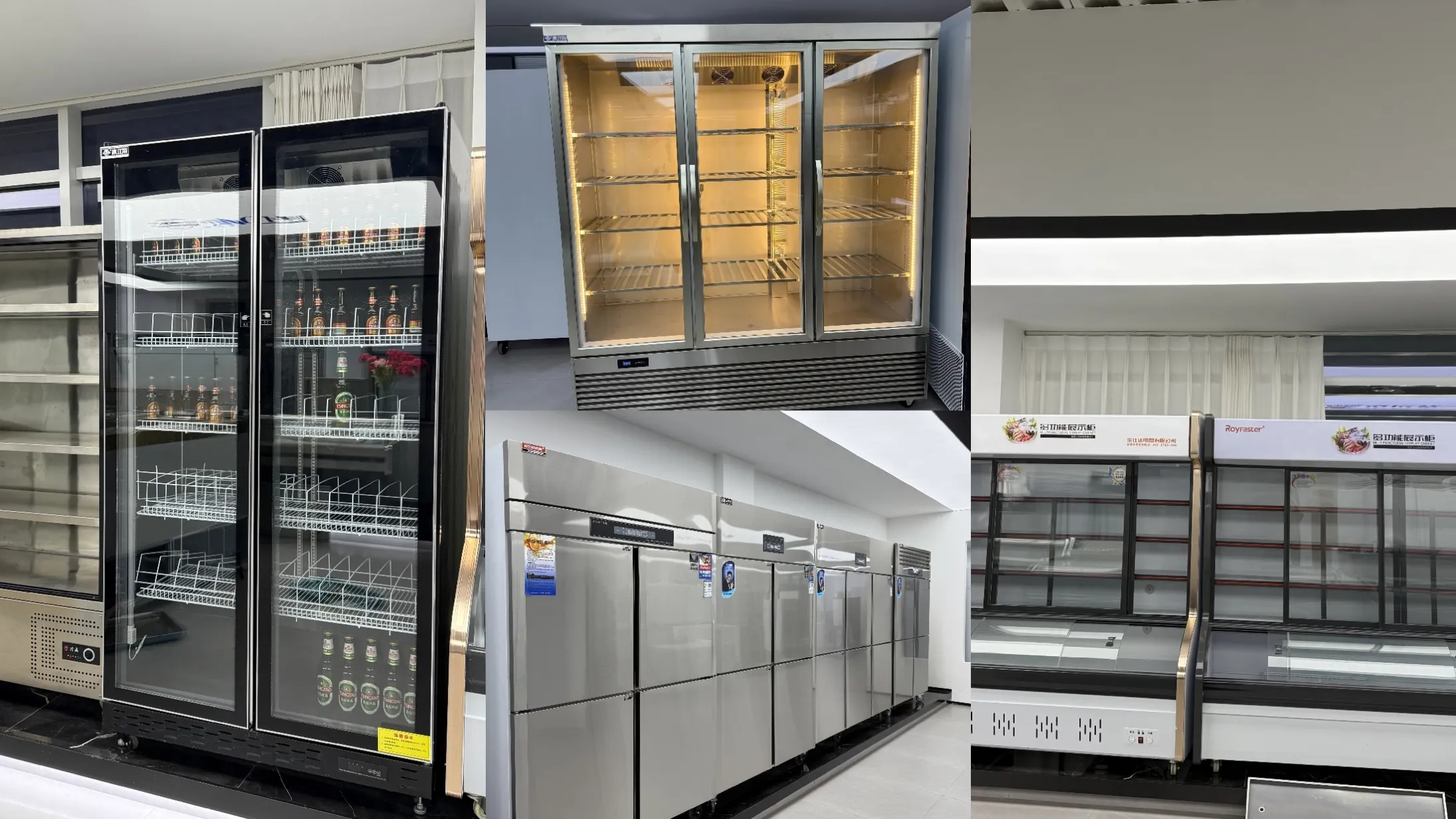
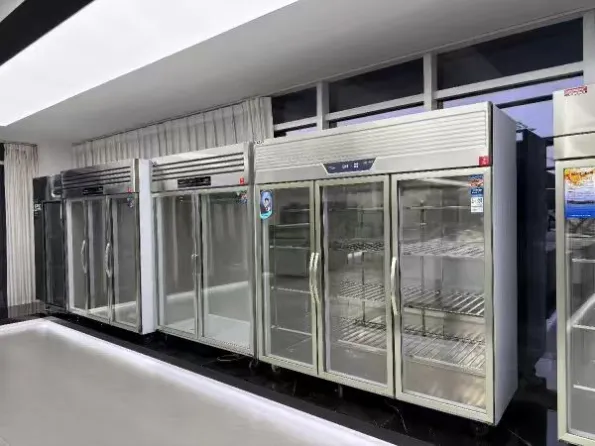
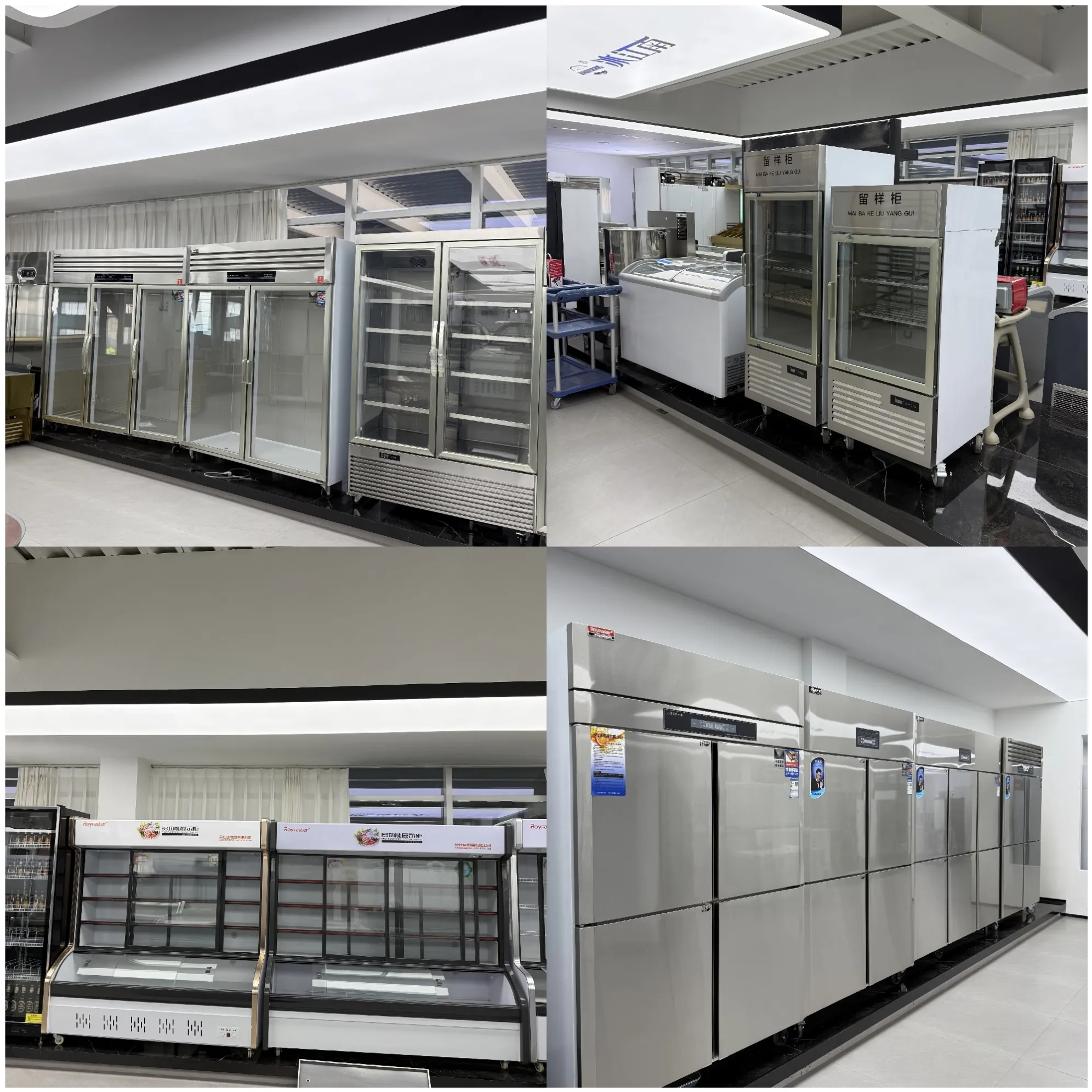
- Upright storage fridges & freezers: Back‑of‑house bulk food storage in restaurants, hotels and institutional kitchens. Available in single‑door, double‑door and triple‑door configurations.
- Glass‑door display coolers: Front‑of‑house beverage and food display in cafes, convenience stores and supermarkets. Transparent doors drive impulse sales.
- Chest freezers: Long‑term frozen storage for meat, seafood and ice cream. High volume capacity at lower cost.
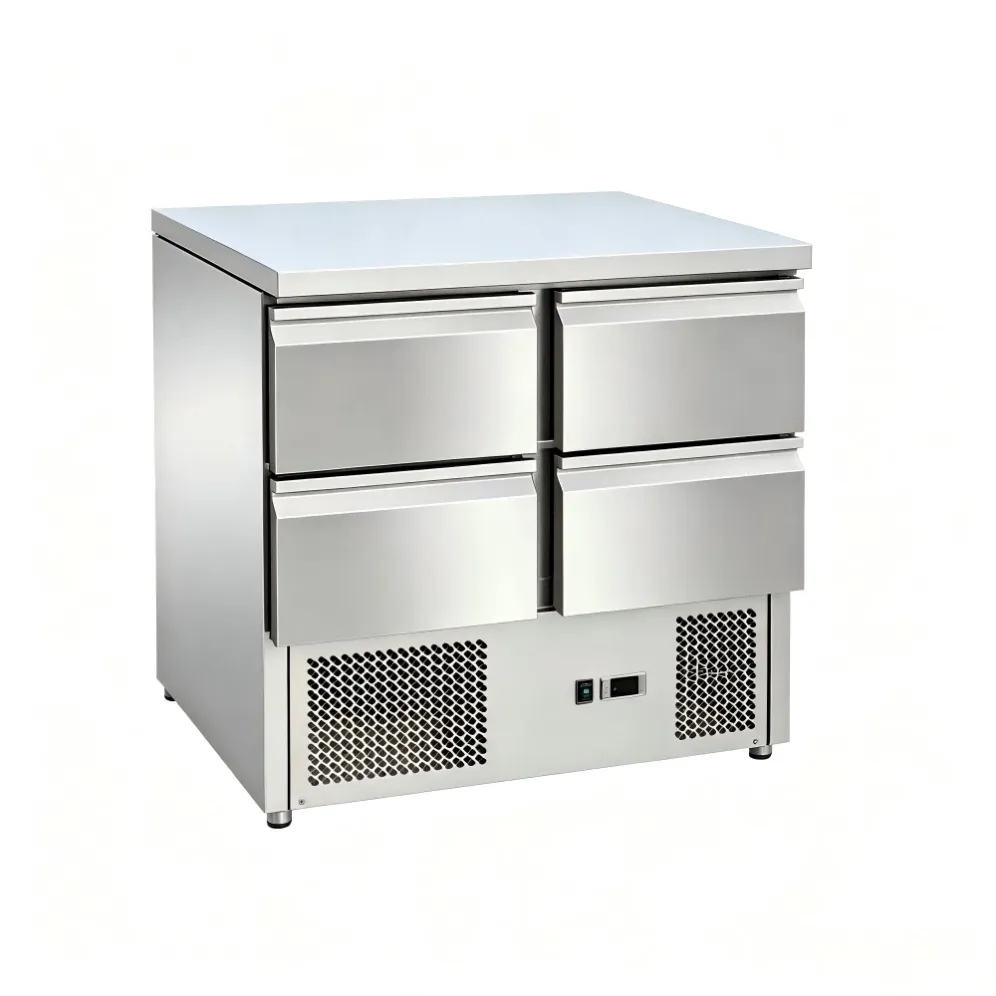
- Pizza & salad prep counters: Refrigerated base with ingredient pans on top, essential for pizzerias and sandwich shops.
- Under‑counter fridges: Space‑saving storage under worktables in compact kitchens.
2. Cooling System: Static Cooling vs. Fan Cooling
The cooling method is the most important technical decision affecting temperature uniformity and price.
- Static (direct) cooling: Natural convection through evaporator plates. Lower cost, quieter operation, but temperature distribution is less uniform and manual defrost is often required. Suitable for budget‑oriented markets and chest freezers.
- Fan (forced air) cooling: Internal fans circulate cold air evenly throughout the cabinet. Faster temperature recovery after door opening, consistent cooling across all shelves, and automatic defrost in most models. Slightly higher price and energy consumption. Recommended for busy commercial kitchens and display coolers.
Quick tip: For upright storage units in high‑volume kitchens, fan cooling is almost always the better choice despite the small cost premium.
3. Compressor Selection
The compressor is the heart of any refrigeration unit. Brand and type determine reliability, repairability and after‑sales support.
Always confirm the compressor brand specification before placing bulk orders, as this is the most common area where suppliers downgrade components to cut costs.
4. Refrigerant and Environmental Compliance
Refrigerant choice is increasingly regulated globally due to environmental concerns.
- R290 (Propane): Natural refrigerant with ultra‑low GWP (Global Warming Potential = 3). The fastest‑growing choice in Europe due to F‑Gas regulations. Highly energy efficient. Requires proper handling due to flammability, but fully safe in factory‑sealed commercial units.
- R404A: Traditional HFC refrigerant with high GWP. Being phased out in the EU under F‑Gas regulation. Still common in some markets but declining rapidly.
- R134a: Medium GWP, widely used in medium‑temperature refrigeration. Gradually being replaced by R290 in new European models.
For European markets, R290 is increasingly becoming the standard for new equipment. For Australia, both R290 and R134a remain common, with R290 growing in popularity.
5. Insulation and Build Quality
Cabinet construction directly affects energy efficiency and durability.
- Polyurethane (PU) foam insulation: The industry standard. Look for 50–60mm thickness for upright units and 70–80mm for chest freezers. Thicker insulation means better cold retention and lower energy consumption.
- Stainless‑steel exterior (AISI 304): Standard for commercial kitchen environments. Resists corrosion and is easy to clean. Some budget models use 430 stainless or galvanized steel — confirm the specification.
- Aluminum interior: Lightweight and corrosion‑resistant. Some premium models use stainless‑steel interiors for heavy‑duty use.
- Self‑closing doors: Essential for commercial kitchens to prevent energy waste from doors left open.
- Adjustable shelving: Chrome‑plated wire shelves or PE‑coated shelves, adjustable in 20–30mm increments.
6. Energy Efficiency
Energy consumption is a major operating cost for end‑users and a key selling point for wholesalers.
- European Union: ERP (Energy‑Related Products) directive requires energy labeling from A to G. Higher‑efficiency models (A+, A++, A+++) command premium pricing and are preferred by environmentally conscious buyers.
- Australia: MEPS (Minimum Energy Performance Standards) sets minimum efficiency requirements. GEMS (Greenhouse and Energy Minimum Standards) registration is required for certain product categories.
- Key efficiency features to look for: LED interior lighting (vs. fluorescent), high‑density PU foam, self‑closing doors, magnetic door gaskets, and efficient compressor selection.
7. Market Compliance Requirements
- European Union: CE marking (LVD + EMC + RoHS), ERP energy labeling, F‑Gas refrigerant compliance, and EU‑representative documentation (DOC). Private‑label brands must ensure correct CE marking and labeling.
- Australia: RCM (Regulatory Compliance Mark) for electrical safety and EMC, GEMS registration for energy efficiency, and refrigerant handling compliance. Importers are responsible for local RCM registration; manufacturers can provide full technical documentation to support the process.
8. Custom Dimensions and Private‑Label OEM Service
Many Horeca wholesalers require non‑standard dimensions to fit specific kitchen layouts or retail spaces. Reliable manufacturers should support custom sizes for upright units, prep counters and under‑counter models.
Private‑label / OEM service is critical for brand‑owning distributors:
- Custom logo printing on doors and panels
- Branded nameplates and control panel overlays
- Custom packaging with your brand artwork
- Customized temperature ranges and thermostat settings
- Optional accessories (additional shelves, castors, lock sets)
Before placing bulk orders, confirm MOQ for custom branding, sample lead‑time, and whether tooling costs apply for non‑standard dimensions.
9. Common Sourcing Mistakes to Avoid
- Ignoring compressor brand specification: Suppliers may substitute cheaper compressors without notice. Always write the compressor brand into the purchase contract.
- Choosing static cooling for high‑volume kitchens: Uneven temperatures lead to food spoilage and customer complaints.
- Overlooking refrigerant regulations: Shipping R404A units into the EU may result in customs seizure or heavy fines under F‑Gas rules.
- Skipping pre‑production samples: Custom dimensions and branding should always be confirmed with a physical sample before mass production.
- Underestimating packaging requirements: Refrigeration units are heavy and fragile. Insist on reinforced wooden crates or foam‑corner packaging for sea freight.
- Ignoring spare parts availability: Ensure the supplier can provide replacement compressors, thermostats, door gaskets and fan motors for after‑sales support.
Summary
High‑performance commercial refrigeration balances reliable compressor quality, appropriate cooling technology, environmentally compliant refrigerants, solid insulation construction and energy efficiency. For wholesalers and importers, choosing the right OEM partner reduces after‑sales risk, ensures regulatory compliance, and helps you stay competitive in your local market.
If you are looking for a reliable OEM manufacturer for commercial fridges, freezers, display coolers and prep counters, feel free to contact us. We can share our full product catalog and discuss your custom & private‑label project requirements.
Whatsapp: +86 15064034862
Email: info@leadkitchentech.com